
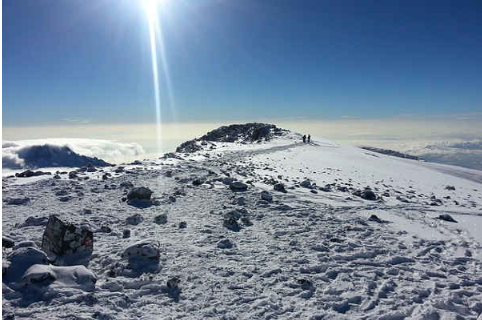
Every year, approximately 50,000 people attempt to reach the summit of Mount Kilimanjaro. Of those, a significant number — depending on whose statistics you consult and how they are measured — do not make it to Uhuru Peak. This reality surprises many prospective trekkers, who approach Kilimanjaro with the assumption that its non-technical nature and well-established trail infrastructure make the summit a near-certainty for anyone reasonably fit and sufficiently determined. The truth is considerably more nuanced — and considerably more instructive.
Kilimanjaro summit success rate is not a single, clean number. It is a layered and context-dependent statistic shaped by route choice, itinerary length, operator quality, individual physiology, preparation levels, weather conditions, and the decisions made on the mountain itself. Understanding what summit success rates actually mean — and more importantly, understanding the specific, actionable variables that drive those rates up or down — is one of the most valuable pieces of research any prospective trekker can conduct before booking their climb.
This article examines Kilimanjaro’s summit success rates in depth: what the data shows, why the numbers vary so dramatically across different routes and operators, what separates consistently successful trekkers from those who turn back, and how to position yourself firmly among those who reach Uhuru Peak and experience the sunrise over Africa from the rooftop of the continent.
The Overall Numbers: What the Data Actually Shows
The most commonly cited overall summit success rate for Kilimanjaro — encompassing all routes, all itinerary lengths, and all operators — sits at approximately 65% to 70%. This means that roughly one in three trekkers who set out to climb Kilimanjaro does not reach the true summit at Uhuru Peak. Some turn back voluntarily due to altitude sickness symptoms; some are guided down by responsible guides who correctly assess that continuing would be dangerous; and a small number make the difficult decision to descend because of injury, exhaustion, or deteriorating weather conditions.
However, the overall 65–70% figure is in many ways a misleading baseline. It aggregates outcomes across wildly different conditions — the five-day Marangu trekker who attempted the summit with inadequate acclimatization time sits in the same statistical pool as the eight-day Lemosho trekker who followed every acclimatization protocol correctly. When broken down by route and itinerary length, the numbers tell a far more instructive and optimistic story for well-prepared trekkers.
The five-day Marangu Route — the shortest standard itinerary — carries success rates consistently estimated between 50% and 60%. The six-day Marangu variant improves this to approximately 65–75%. The six-day Machame Route delivers rates in the 70–75% range, while the seven-day Machame regularly achieves 80–85% success. The eight-day Lemosho Route is widely regarded as one of the most acclimatization-optimized routes on the mountain, with reputable operators reporting consistent success rates of 85–90%. The nine-day Northern Circuit — the longest standard itinerary — achieves the highest success rates of any route, with well-managed expeditions regularly exceeding 90%.
These numbers reflect a direct, measurable, and entirely logical relationship between time spent on the mountain and the body’s capacity to acclimatize to progressively higher altitude. Every additional day of gradual ascent is a day in which the body produces more red blood cells, adjusts its respiratory drive, recalibrates its fluid balance, and prepares its cardiovascular system for the demands of the summit push. The statistics are unambiguous: time on the mountain is the single most powerful predictor of summit success.
Why Route Choice Is the Most Important Decision
The route you choose is the framework within which every other success factor operates. No amount of fitness, determination, or quality guiding can fully compensate for an itinerary that does not give the body adequate time to acclimatize. This is why route selection deserves far more careful consideration than many trekkers initially give it.
The Marangu Route’s lower success rates are not a reflection of difficult terrain — it is, in fact, the gentlest gradient of any standard Kilimanjaro route. They are a direct consequence of its standard five-day itinerary, which attempts to take a trekker from 1,800 meters to 5,895 meters in a timeframe that the majority of human bodies simply cannot acclimatize to adequately. The hut accommodation and relative comfort of Marangu are genuinely appealing features, but they do not offset the physiological disadvantage of the shorter duration.
The Machame and Lemosho routes achieve higher success rates not merely because of their design, but because they incorporate strategic acclimatization features. The ascent to Lava Tower at 4,600 meters — undertaken on day three of both routes — followed by a descent to the Barranco Valley at 3,900 meters for the night is a deliberate application of the “climb high, sleep low” principle. This single day’s profile stimulates powerful acclimatization responses while avoiding a night at altitude the body is not yet ready for. The measurable impact on subsequent days — and on summit night performance — is significant and reflected clearly in outcomes data.
The Northern Circuit’s exceptional success rates reflect the ultimate expression of this logic: nine days of gradual, varied altitude gain that traverses the least-visited terrain on the mountain while providing the most thorough acclimatization profile available on any standard route. For trekkers with the time and budget to invest in the best possible foundation for their summit attempt, the Northern Circuit is the definitive choice.
The Role of Operator Quality in Summit Success
Route and itinerary choice are within the trekker’s direct control before departure. Operator quality is equally important — and equally controllable through diligent pre-booking research. The difference in summit success rates between a well-run, safety-focused Kilimanjaro operator and a budget operator cutting corners on staff ratios, guide training, and safety protocols can be substantial and is consistently reflected in independent outcome data.
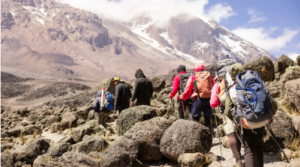
A high-quality operator impacts summit success through several interconnected mechanisms. First, experienced and well-trained guides set the correct pace — deliberately slow, metronomically consistent, and adjusted in real time to the condition of the group. Guides who push too fast, or who allow stronger trekkers to set a pace that leaves others struggling, fundamentally undermine the acclimatization process for the entire group. Second, quality operators maintain low trekker-to-guide ratios — typically one assistant guide for every two to three trekkers — ensuring that every individual receives adequate personal monitoring and attention rather than being one face among a large crowd.
Third, rigorous daily health monitoring using pulse oximeters to measure blood oxygen saturation levels provides quantitative data that supplements visual observation. A trekker whose SpO2 reading has declined significantly overnight, or whose saturation is meaningfully lower than fellow trekkers at the same elevation, can be identified and managed proactively — through extended morning rest, reduced pace, or the early decision to descend before a manageable situation becomes a medical emergency.
Fourth, well-nourished trekkers summit at significantly higher rates than those eating inadequately at altitude. The appetite suppression caused by reduced oxygen is real and well-documented, and a skilled mountain cook who prepares nutritionally dense, appetizing, and varied meals — served hot and on a consistent schedule — directly supports the physical reserves trekkers need for summit night. A trekker who arrives at high camp having eaten poorly across six days of climbing carries a meaningfully smaller energy reserve for the most demanding section of the entire climb.
Individual Factors: What You Can and Cannot Control
Beyond route and operator, individual factors play a significant role in summit outcomes — some controllable, some not. Understanding this distinction empowers trekkers to maximize the variables within their influence while maintaining realistic expectations about those that are not.
Physical fitness is the most commonly overestimated individual factor. Cardiovascular fitness has relatively limited influence on acclimatization capacity. What fitness genuinely provides is the ability to manage the cumulative physical demand of seven or eight hours of hiking per day without arriving at camp in a state of complete exhaustion that impairs overnight recovery. A fitter trekker conserves energy more efficiently, recovers better between days, and arrives at the summit push with more physical reserves. These are real advantages — but they do not override the fundamental constraint of insufficient acclimatization time.
Prior altitude experience is a more informative predictor than fitness. Trekkers who have successfully acclimatized above 4,000 meters on previous trips have demonstrated that their physiology responds adequately to altitude gain. This does not guarantee success on Kilimanjaro — each climb is physiologically independent — but it provides meaningful reassurance. Conversely, trekkers who have experienced significant AMS symptoms at moderate altitude previously should factor this into their route selection, choosing the longest available itinerary and discussing prophylactic medication options with a physician.
Hydration discipline is one of the most controllable and impactful individual factors. Consistently drinking three to four liters of water daily throughout the trek — even when altitude suppresses both appetite and thirst — directly supports acclimatization physiology, reduces AMS symptom severity, and maintains the cognitive and physical performance needed for good decision-making on the mountain. Dehydration is consistently identified as an exacerbating factor in altitude illness cases, and yet it remains one of the most straightforwardly preventable conditions on any Kilimanjaro expedition.
Pacing discipline — the willingness to walk at the guide’s pace rather than one’s own instinctive pace — is perhaps the most psychologically demanding individual factor. For active, fit trekkers accustomed to pushing hard, walking at a deliberately slow pace in the early days can feel counterintuitive and frustrating. The temptation to push ahead of the group or treat the lower-mountain days as casual warm-ups for the “real” effort higher up directly impairs acclimatization. Resisting this temptation — embracing pole pole as a genuine philosophy rather than a piece of Swahili vocabulary — is a measurable performance advantage at altitude.
Summit Night and the Final Variable
Even with perfect route selection, an experienced operator, excellent fitness, and disciplined hydration and pacing throughout the climb, summit night remains the most demanding and unpredictable section of any Kilimanjaro expedition. It is during the midnight-to-dawn push from high camp to Uhuru Peak that the accumulated physiological stress of the entire climb converges with the most extreme conditions the mountain offers — temperatures that can drop to -20°C, winds that can exceed 50 kilometers per hour, and oxygen levels at roughly half the sea-level norm.
The mental component of summit success on summit night is significant and frequently underestimated in planning discussions focused primarily on physical preparation. The ability to focus on one step at a time, to manage genuine physical discomfort without catastrophizing it, to draw on personal sources of motivation and meaning when both body and mind are urging retreat — these qualities determine outcomes at 5,000 meters in the pre-dawn darkness as surely as fitness and acclimatization. Trekkers who have reflected seriously on their reasons for attempting the climb and who can access those motivations under extreme conditions give themselves a psychological edge that no gear upgrade or pharmaceutical supplement can fully replicate.
The guides who accompany summit attempts understand this dimension intimately. Their encouragement — steady, experienced, and calibrated to the individual — is one of the most valuable assets any trekker carries through the final hours before Uhuru Peak.
Key Takeaways
- The overall Kilimanjaro summit success rate across all routes and operators is approximately 65–70%, meaning roughly one in three trekkers does not reach Uhuru Peak.
- Success rates vary dramatically by route and duration — the five-day Marangu achieves approximately 50–60%, while the eight-day Lemosho and nine-day Northern Circuit consistently deliver 85–90% and 90%+ with quality operators.
- Time on the mountain is the single most powerful predictor of summit success — every additional day of gradual ascent meaningfully improves acclimatization and summit outcomes.
- The “climb high, sleep low” principle, employed at the Lava Tower on Machame and Lemosho, is one of the most effective acclimatization techniques available and directly contributes to these routes’ stronger success rates.
- Operator quality is as consequential as route choice — guide experience, low trekker-to-guide ratios, daily pulse oximeter health checks, quality mountain nutrition, and proper safety equipment all directly impact summit outcomes.
- Physical fitness is a supporting factor but not a primary determinant of summit success — acclimatization capacity is largely physiologically determined and is not meaningfully enhanced by cardiovascular conditioning alone.
- Hydration discipline — consistently consuming three to four liters of water daily throughout the trek — is one of the most controllable and impactful factors in AMS prevention and summit performance.
- Pacing discipline — following the guide’s deliberately slow pace without pushing ahead — is psychologically demanding but one of the most evidence-based individual behaviors for improving acclimatization and summit success rates.
- Prior altitude experience above 4,000 meters provides valuable insight into individual altitude tolerance and should actively inform route and itinerary selection decisions.
- Summit night mental resilience — the ability to manage extreme discomfort and draw on personal motivation during the midnight-to-dawn push — is as decisive as physical preparation in the final hours before Uhuru Peak.
Frequently Asked Questions (Q&A)
Q: What is the real Kilimanjaro summit success rate, and why do different sources quote different numbers?
A: The variation in quoted rates reflects genuine differences in how data is collected and defined. Tanzania National Parks does not publish comprehensive disaggregated summit statistics, so most figures come from individual operator records, independent researcher surveys, and trekking organization compilations. Rates vary because they aggregate trekkers across all routes, all itinerary lengths, all operators, and all levels of preparation — a fundamentally mixed population. When filtered by specific route, itinerary length, and operator quality, rates become considerably more consistent and meaningful. The honest overall figure is approximately 65–70%, with route-specific rates ranging from around 50% on five-day Marangu to over 90% on nine-day Northern Circuit expeditions with reputable operators.
Q: Does reaching Stella Point count as summiting Kilimanjaro?
A: Stella Point sits on the crater rim at 5,756 meters and is awarded a separate achievement certificate by Tanzania National Parks. It is approximately 139 meters below and 45 to 90 minutes of hiking from Uhuru Peak, the true summit at 5,895 meters. Some operators include Stella Point arrivals in their summit success statistics, which inflates their reported rates relative to operators who count only Uhuru Peak completions. When evaluating operator success rates, always clarify whether the figure refers specifically to Uhuru Peak or includes Stella Point arrivals as well.
Q: Can pre-climb acclimatization treks meaningfully improve summit success odds?
A: Yes. Spending time at altitude before beginning the Kilimanjaro climb initiates the early stages of acclimatization — increasing respiratory drive, beginning the red blood cell production process, and familiarizing the body with reduced oxygen availability. Climbing Mount Meru (4,566 meters) in Arusha National Park in the three to four days before Kilimanjaro is one of the most effective and geographically convenient pre-acclimatization strategies available in Tanzania. Spending time at moderate altitude destinations during the weeks before departure provides additional cumulative benefit.
Q: How do reputable operators track and report their summit success rates?
A: Responsible operators maintain detailed records of every client’s trek outcome — documenting whether each trekker reached Uhuru Peak, Stella Point, or descended below the crater rim, and the reason for any early turnaround. These records enable route-specific and overall success rate calculations, help identify patterns in where and why trekkers struggle, and inform continuous refinement of guiding protocols and health monitoring approaches. When evaluating operators, request their documented success rate specifically for your intended route and itinerary length — not a generalized marketing claim, but a figure derived from actual client records.
Q: Does the time of year affect summit success rates?
A: Indirectly, yes. The primary dry seasons — late June to October and January to mid-March — offer the most stable conditions, clearest summit approaches, and most predictable weather on summit night, all contributing modestly to higher success rates compared to the wetter months. However, the influence of season on success rates is considerably smaller than that of route choice and itinerary length. A well-prepared trekker on an eight-day Lemosho itinerary in March will typically outperform an underprepared trekker on a five-day Marangu itinerary in August, regardless of seasonal differences.
Q: What should I do if I feel unable to continue on summit night?
A: Communicate your condition immediately and honestly to your guide. Do not attempt to conceal symptoms, push through worsening altitude sickness, or make unilateral decisions without your guide’s knowledge. Experienced guides are trained to assess symptoms in real time and to support both the careful decision to continue and the safe decision to descend. If descent is recommended, trust the guide’s judgment — it is made in your genuine best interest based on current conditions and medical assessment at extreme altitude. Descending from a Kilimanjaro attempt is not failure; it is the correct and often courageous response to a medical situation that the mountain has presented.
Q: Can I re-attempt Kilimanjaro after an unsuccessful first attempt?
A: Absolutely — and many trekkers do exactly this. A managed, safe first attempt that does not result in a summit provides invaluable personal data about individual altitude response, the psychological demands of the climb, and the specific preparation adjustments most likely to improve outcomes on a subsequent attempt. Second-time Kilimanjaro trekkers who choose a longer route, invest in pre-departure altitude acclimatization, and partner with a high-quality operator frequently achieve the summit they were denied the first time. The mountain consistently rewards persistence, preparation, and respect.
Conclusion
Kilimanjaro’s summit success rates tell a story that is simultaneously sobering and profoundly empowering. Sobering, because the data confirms that the summit is genuinely not guaranteed for every trekker who steps onto the trail — and that overconfidence, inadequate preparation, and poor route selection claim a significant proportion of summit attempts every single year. Empowering, because the same data reveals with remarkable clarity that the most consequential variables in summit success are largely within the trekker’s direct control.
Choose the right route. Choose an itinerary that gives your body the time it needs. Choose an operator with the experience, ethics, and safety infrastructure that the mountain demands. Prepare your body diligently in the months before departure. Hydrate consistently, pace yourself honestly, and listen to your guide with the same respect you would give to any expert whose knowledge could determine your safety and success. These are not vague aspirational recommendations — they are evidence-based decisions that, taken together, place you firmly on the right side of the summit success statistics.
The difference between a trekker who stands at Uhuru Peak watching the sun rise over the African continent and one who turns back below the crater rim is rarely a matter of luck. It is almost always a matter of preparation, patience, and the wisdom to trust the process. For those ready to approach Kilimanjaro with that wisdom — and with the dedicated support of a team that shares their commitment to the summit — Tanzania Migration Safaris & Travel brings the experience, the protocols, and the genuine passion required to give every trekker the very best possible chance of reaching the top of Africa.