
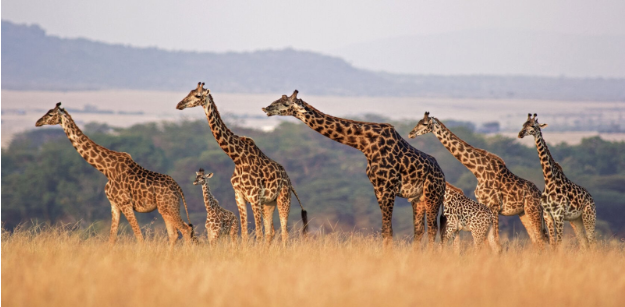
Stop following someone else’s trip. Tanzania is too extraordinary — and too personal — for a one-size-fits-all approach.
Introduction
Every traveller who dreams of Africa carries a slightly different image in their mind. For some it is lions at golden hour, stretched across a kopje with the Serengeti rolling endlessly behind them. For others it is the moment a chimpanzee makes direct eye contact in a mountain forest. For others still it is the call to prayer drifting over Stone Town at dusk, or the silence at 5,800 metres on Kilimanjaro’s crater rim with the curvature of the Earth visible on the horizon. A custom Tanzania itinerary begins with exactly that image — your image — and builds everything outward from it.
Tanzania is one of the most geographically and ecologically diverse countries in Africa. It contains the continent’s highest peak, its largest game reserve, its most iconic savanna, some of its finest beaches, and several of its most remote wilderness areas. No single standard tour itinerary can do justice to this breadth. The travellers who return from Tanzania most deeply satisfied are almost universally those who invested time in personalising their journey — choosing the right parks for their interests, the right accommodation style for their comfort level, the right pace for their temperament, and the right season for their wildlife priorities.
This guide is your framework for building that journey. Whether you are planning a week-long introduction to Tanzania’s northern highlights or a three-week immersive expedition across multiple ecosystems, what follows will equip you with the knowledge, structure, and confidence to design a custom Tanzania itinerary that feels entirely, authentically yours.
Why a Custom Tanzania Itinerary Outperforms a Standard Package
The travel industry is built on efficiency, and standard Tanzania tour packages are built for volume. They follow the same well-worn roads between the same popular lodges, visit the same parks in the same sequence, and deliver a reliably pleasant but rarely exceptional experience. They are designed to satisfy the broadest possible range of travellers — which inevitably means they are perfectly tailored for almost no one.
A custom Tanzania itinerary operates from the opposite principle. It begins with a detailed conversation about who you are as a traveller: what excites you, what exhausts you, what you have already seen, what you have always dreamed of, how much time you have, what budget you are working within, and what you hope to carry home in your memory. From that foundation, every element — destination selection, accommodation category, game drive timing, cultural activities, internal transfer method, and itinerary pacing — is built specifically around your answers.
The difference in experience is not marginal. It is transformative. When your safari guide knows you are a serious bird photographer, they spend the morning light at a lagoon rather than following the crowd to the lion sighting. When your itinerary designer knows you find consecutive game drives exhausting, they build in a cultural village visit or a bush walk to break the rhythm. When your lodge choices reflect your genuine aesthetic preferences rather than generic “5-star” criteria, you wake up every morning in a place that feels right.
Custom itinerary planning also unlocks access to Tanzania’s lesser-visited gems — the remote wilderness of Ruaha, the ancient forests of Mahale, the flamingo-pink shores of Lake Natron, the archaeological richness of Olduvai Gorge — destinations that rarely appear in standard packages but that often become the most treasured memories of the entire trip.
The Building Blocks of a Custom Tanzania Itinerary
Step 1 — Define Your Core Motivation
Before selecting a single destination or accommodation, be honest with yourself about what you most want from this trip. Tanzania’s experiences broadly divide into several distinct categories, and knowing your primary motivation shapes every subsequent decision.
- Wildlife and Big Five: Your focus belongs on the northern circuit — Serengeti, Ngorongoro, and Tarangire — with timing aligned to migration season or calving, depending on preference.
- Adventure and Physical Challenge: Kilimanjaro trekking, walking safaris in Selous or Ruaha, or mountain biking and kayaking in the southern highlands.
- Photography: Prioritise the Serengeti’s central plains for cheetah, the Ngorongoro Crater rim at dawn, and the baobab-dominated landscapes of Tarangire. Consider a dedicated photography-focused guide.
- Cultural Immersion: Build in time with the Maasai around Ngorongoro, the Hadzabe at Lake Eyasi, and Zanzibar’s Stone Town for Arabic-Swahili history and architecture.
- Beach and Marine Life: Zanzibar, Pemba Island, or Mafia Island for world-class snorkelling, diving, and total relaxation.
- Primate Encounters: Mahale Mountains or Gombe Stream for chimpanzees; the Udzungwa Mountains for rare endemic species.
- Off-the-Beaten-Path Wilderness: Ruaha, Katavi, or the remote Selous for genuine solitude and exclusive wildlife encounters.
Most travellers discover they have two or three primary motivations rather than one. A well-designed custom itinerary can absolutely accommodate combinations — a wildlife and photography focus in the north, followed by a walking safari in the south and a beach extension in Zanzibar is not just achievable; it is among Tanzania’s most rewarding trip structures.
Step 2 — Choose Your Regions Strategically
Tanzania’s safari regions are geographically divided into the northern circuit, the southern circuit, and the western circuit, each with distinct character and accessibility.
The Northern Circuit — comprising Serengeti, Ngorongoro, Tarangire, and Lake Manyara — is Tanzania’s most visited region and for good reason. It offers the highest density of iconic wildlife, the most developed tourism infrastructure, and the widest range of accommodation options from budget camping to ultra-luxury private camps. It is the natural starting point for most custom Tanzania itineraries and an essential component for first-time visitors.
The Southern Circuit — anchored by Nyerere National Park (Selous), Ruaha, and the Udzungwa Mountains — is wilder, less visited, and in many ways more authentically remote. Walking safaris, boat safaris on the Rufiji River, and enormous elephant herds characterise this region. Fly-in access from Dar es Salaam keeps transfer times manageable. The southern circuit rewards travellers seeking solitude, exclusivity, and a bush experience without the vehicle concentrations occasionally found in the north during peak season.
The Western Circuit — centred on Mahale Mountains, Gombe Stream, and Katavi National Park — is Tanzania’s most remote and most extraordinary region for the serious adventurer. Chimpanzee trekking in the mountain forests above Lake Tanganyika, lion and buffalo viewing in Katavi’s floodplains, and the complete absence of tourist crowds make the western circuit the ultimate expression of off-grid Tanzania travel. Logistics require careful planning and fly-in transfers, but the rewards are proportionately exceptional.
Step 3 — Select Accommodation That Matches Your Travel Personality
Accommodation in Tanzania exists across a wider spectrum than almost any other safari destination, and your choices here fundamentally shape the texture of your experience.
Luxury Tented Camps deliver the most complete Tanzania experience — sleeping under canvas with the sounds of the bush, waking to elephant silhouettes in the pre-dawn light, dining under open skies, and being attended by staff who remember your name and your coffee order. The finest camps in Tanzania — in the Serengeti’s private conservancies, on the Ngorongoro rim, and deep in the Selous — rival the world’s best boutique hotels in service and cuisine while remaining inseparably connected to the wilderness around them.
Mid-Range Lodges offer solid comfort, reliable game viewing, and increasingly good cuisine at a more accessible price point. For travellers whose primary investment is in experiences rather than accommodation luxury, a well-chosen mid-range lodge allows budget reallocation toward additional parks, activities, or itinerary days.
Mobile Camping Safaris follow the migration or move between remote locations in comfortable but deliberately minimalist tented camps. This style prioritises proximity to wildlife above all else and delivers a genuine sense of expedition. Best suited to adventurous, adaptable travellers.
Private House and Villa Rentals are available in Zanzibar and select mainland locations for families or groups seeking self-contained spaces with personal staff and maximum flexibility.
Step 4 — Build in the Right Pace
One of the most common mistakes in Tanzania itinerary planning is overscheduling. The instinct to maximise park coverage is understandable — Tanzania has so much to offer — but moving locations every day or two produces exhaustion rather than wonder. Long transfer drives between parks accumulate, packing and unpacking becomes its own full-time activity, and the depth of experience that comes from spending three nights in a single location is lost.
A well-paced custom Tanzania itinerary typically allocates a minimum of two nights, ideally three, at each location. This allows for morning and evening game drives, a midday activity, genuine relaxation, and the unhurried observation that produces the most memorable wildlife encounters. The animals do not perform on schedule; depth of time in a single area dramatically increases your chances of witnessing something extraordinary.
Step 5 — Layer in Cultural and Experiential Dimensions
The most memorable Tanzania itineraries are those that weave wildlife, culture, and personal challenge into a coherent narrative rather than treating each as a separate module.
Consider building in a half-day visit to a Maasai community near Ngorongoro for a genuine cultural exchange — not a staged performance, but a guided conversation with elders, a walk through the boma, and an understanding of how this ancient pastoral culture navigates the modern world. Add a spice farm tour in Zanzibar to understand the island’s centuries-old trading history through sight, smell, and taste. If Kilimanjaro is on your list, place it at the beginning of your itinerary so that the physical demands of the trek do not compete with the anticipation of wildlife experiences to follow.
Sample Custom Tanzania Itinerary Frameworks
To illustrate how these principles translate into actual trips, here are three distinct custom itinerary frameworks designed for different traveller profiles.
The 8-Day Classic Northern Safari Days 1–2 in Tarangire (elephant and baobab landscapes), Days 3–4 in the Ngorongoro Conservation Area with a crater game drive and Olduvai Gorge visit, Days 5–7 in the central Serengeti (Big Five and predator focus), Day 8 fly to Zanzibar or departure. Ideal for first-time visitors with limited time.
The 14-Day North-South Combination Days 1–3 in Tarangire and Lake Manyara, Days 4–5 Ngorongoro Crater and Maasai cultural visit, Days 6–8 northern Serengeti (migration crossings July–October), Day 9 fly south to Nyerere/Selous, Days 10–12 boat safari and walking safari on the Rufiji River, Days 13–14 Zanzibar. Ideal for returning visitors or those seeking the contrast between Tanzania’s north and south.
The 18-Day Grand Tanzania Expedition Days 1–3 Kilimanjaro acclimatisation and cultural visit, Days 4–9 Kilimanjaro summit attempt via Lemosho Route, Day 10 recovery in Arusha, Days 11–13 Serengeti private conservancy with hot air balloon, Days 14–15 Ngorongoro and Olduvai Gorge, Day 16 fly to Mahale Mountains, Days 17–18 chimpanzee trekking on Lake Tanganyika. Ideal for the bucket-list adventurer who wants it all.
Conclusion
A custom Tanzania itinerary is the most powerful tool available to any traveller who wants to experience this extraordinary country at its fullest depth. It acknowledges a fundamental truth about travel: that the best journeys are not the ones that follow the most popular routes, but the ones that are built around who you actually are — your curiosity, your pace, your sense of wonder, and the specific images that have been living in your imagination since you first dreamed of Africa.
Tanzania rewards personalisation more generously than almost any destination in the world. Its sheer geographic, ecological, and cultural diversity means that two travellers can spend the same two weeks in Tanzania and return having had almost entirely different experiences — both of them extraordinary, each perfectly suited to the person who lived it.
The investment of time and thought that goes into designing a custom Tanzania itinerary repays itself a hundredfold in the quality and authenticity of the experience. Start with your dream. Work backwards from there. And trust that Tanzania — with the right planning and the right partner — will exceed everything you imagined.
The journey of a lifetime starts not with a booking, but with a question: what do I truly want to experience? Answer that honestly, and the rest follows naturally.
Key Takeaways
- A custom Tanzania itinerary begins with your personal travel motivation — wildlife, adventure, photography, culture, beaches, or remote wilderness — not with a pre-packaged route.
- Tanzania’s regions divide into three distinct circuits — northern (Serengeti, Ngorongoro, Tarangire), southern (Ruaha, Selous), and western (Mahale, Katavi) — each offering a fundamentally different safari character.
- Accommodation choice shapes the entire texture of your trip — from mobile tented camps following the migration to ultra-luxury private concessions and mid-range lodges offering excellent value.
- Pacing is as important as destination selection — allocating a minimum of two to three nights per location dramatically deepens wildlife encounters and overall satisfaction.
- Combining safari regions unlocks Tanzania’s full range — northern wildlife paired with southern walking safaris or western chimpanzee trekking creates far richer itineraries than single-circuit trips.
- Cultural layers elevate any itinerary — Maasai village visits, Hadzabe encounters, Zanzibar spice tours, and Olduvai Gorge add human depth and historical perspective to the natural experiences.
- Custom itinerary planning unlocks lesser-visited destinations — Ruaha, Mahale, Katavi, Lake Natron, and Pemba Island rarely appear in standard packages but often become the most treasured memories.
- Place Kilimanjaro at the start of multi-activity itineraries — completing the physical challenge before the safari ensures energy and focus are at their peak for wildlife experiences.
Frequently Asked Questions (FAQ)
Q: How far in advance should I start planning a custom Tanzania itinerary?
A: Ideally, begin planning 9 to 12 months before your intended travel date. The finest lodges and tented camps — particularly in the Serengeti during migration season and at Mahale Mountains year-round — book out extremely quickly. Kilimanjaro summit permits during peak season (June–October and December–January) also require advance booking. Starting early gives you access to the best options; leaving it late means compromising on accommodation quality or missing preferred travel dates entirely.
Q: Do I need a specialist operator to build a custom Tanzania itinerary?
A: While it is technically possible to self-arrange parts of a Tanzania trip, a specialist operator adds enormous value to a custom itinerary. They have established relationships with the best guides and camps, real-time knowledge of seasonal wildlife movements, the ability to make rapid adjustments when circumstances change, and the expertise to translate your preferences into an itinerary that works logistically as well as experientially. Always choose a TATO (Tanzania Association of Tour Operators) registered operator with verifiable references.
Q: How many parks should I include in a custom Tanzania itinerary?
A: Quality consistently trumps quantity. Two to three parks with three nights each will deliver a far richer experience than five parks with one night each. For a 10-day safari, three parks is ideal. For 14 days, three to four parks allows for genuine depth. Resist the temptation to add destinations simply because they exist — every additional park comes with transfer time that reduces the hours available for actual wildlife viewing.
Q: What is the best way to travel between Tanzania’s parks?
A: Light aircraft transfers are strongly recommended for any itinerary spanning more than two parks, or combining northern and southern circuits. Flying between Arusha, the Serengeti airstrips, Ruaha, Selous, and Zanzibar eliminates long and tiring road transfers, maximises time in the bush, and opens up remote destinations that would be impractical to reach by road. Road transfers work well for adjacent parks on the northern circuit (particularly Arusha to Tarangire and Tarangire to Ngorongoro).
Q: Can a custom Tanzania itinerary work for families with young children?
A: Absolutely — and a customised approach is actually more important for family groups than for solo or couple travellers, because standard packages rarely account for children’s attention spans, activity preferences, or age-specific wildlife priorities. Family-focused Tanzania itineraries typically incorporate shorter game drives, dedicated junior ranger activities, swimming pool time, and lodges with interconnecting family suites. The Serengeti and Ngorongoro are excellent with children; walking safaris are generally restricted to ages 12 to 16 and above.
Q: Should Zanzibar be included in every custom Tanzania itinerary?
A: Not necessarily — it depends entirely on your priorities. For wildlife-focused travellers with limited time, every day in Zanzibar is a day not spent on safari, and the trade-off may not feel worthwhile. However, for most travellers — particularly those combining Tanzania with a beach holiday, couples seeking a romantic conclusion to an adventurous journey, or families wanting a few days of total relaxation before the long flight home — Zanzibar is an exceptional addition that beautifully complements the safari experience. Three to five days is the ideal Zanzibar allocation.
Q: What is the difference between a private and a group custom Tanzania itinerary?
A: A private custom itinerary means your vehicle, guide, and schedule are exclusively yours — you depart on game drives when you choose, stay as long as you wish at a sighting, and your guide focuses entirely on your specific interests. A group custom itinerary shares costs and a vehicle between a small party travelling together. Private is the premium option and delivers a meaningfully superior experience for wildlife photography, families, and travellers with specific interests. It is strongly recommended for anyone designing a custom Tanzania itinerary.
Q: Is it possible to design a custom Tanzania itinerary on a limited budget?
A: Yes, though the customisation options narrow at lower price points. Budget-friendly custom itineraries typically rely on camping safaris, shared vehicles, and mid-range lodges in less-visited parks. The northern circuit on a camping safari with a good operator can deliver outstanding wildlife encounters at $150–$250 per person per day. The key is to allocate your budget strategically — spending more nights in fewer, better-positioned locations rather than spreading thin across many parks and many accommodation compromises.
Your custom Tanzania itinerary is out there, waiting to be designed. It starts with a single question: what does your Africa look like?